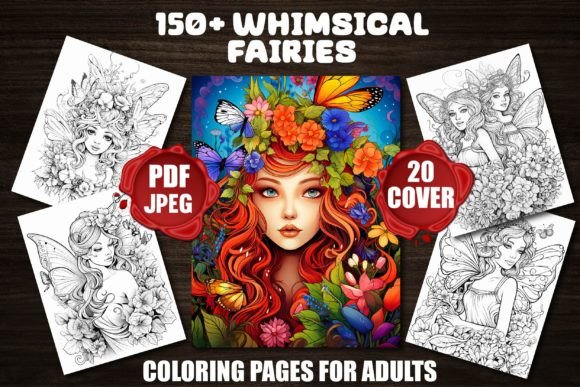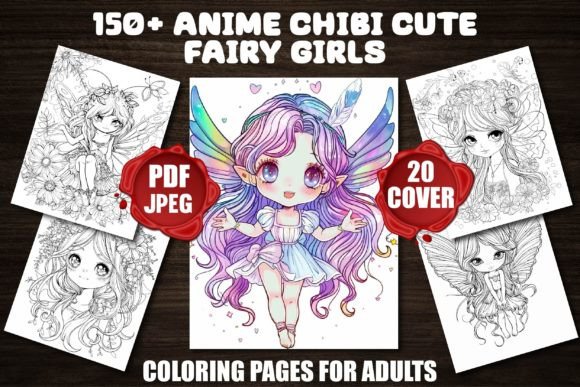
Anime Chibi Cute Fairy Girls Coloring
Imagine unwinding after a long day—not with scrolling, but with colored pencils gliding across delicate wings, tiny flower crowns, and shimmering fairy wands. Anime Chibi Cute Fairy Girls Coloring is more than a collection of pages—it’s a tactile invitation to pause, play, and reconnect with imaginative joy. Designed specifically for adults who appreciate both whimsy and craftsmanship, this resource bridges nostalgia and intentionality in a way few coloring tools do.
What Makes These Pages Stand Out—Beyond the Sparkle
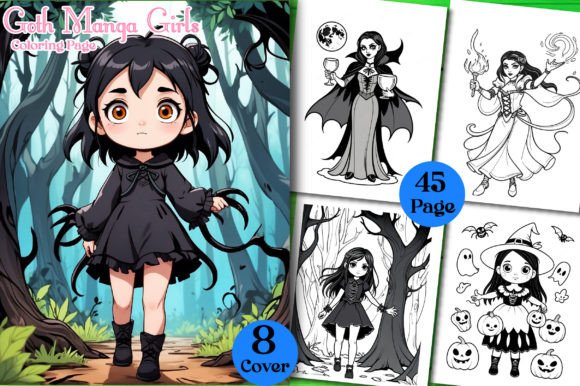
At its core, Anime Chibi Cute Fairy Girls Coloring delivers 150+ original black-and-white illustrations—all rendered in expressive chibi proportions: oversized eyes, soft curves, and exaggerated charm that feels warm rather than cutesy. Unlike generic clipart or AI-generated line art, each design was hand-crafted with consistent linework, intentional negative space, and thoughtful detail density. The A4 (8.5×11 inch) sizing isn’t arbitrary—it balances portability with room for fine-tipped pens, watercolor washes, or blending pencils without crowding.
The 300 DPI resolution ensures crisp reproduction whether you’re printing at home, using a local print shop, or preparing files for KDP. No pixelation. No broken lines. Just clean, scalable vectors that hold up across formats—from single-page social media posts to full-color interior layouts.
Real-World Uses You Might Not Expect
Professionals and creators often overlook how versatile themed coloring content can be—especially when rooted in strong visual language like anime-inspired chibi aesthetics. Here’s where Anime Chibi Cute Fairy Girls Coloring proves unexpectedly practical:
- Educators use select pages as low-stakes mindfulness prompts during classroom transitions or SEL (social-emotional learning) activities—students respond well to the gentle fantasy tone and non-intimidating scale.
- Freelance designers repurpose individual motifs (e.g., mushroom stools, star-topped staffs, dandelion puffs) as decorative elements in client presentations, pitch decks, or digital newsletters—adding personality without sacrificing professionalism.
- KDP publishers integrate these pages directly into themed activity bundles—pairing them with journal prompts, seasonal affirmations, or light lore snippets to increase perceived value and page count without extra illustration costs.
- Small business owners print select designs on greeting cards, gift tags, or packaging inserts—especially effective for indie beauty brands, tea shops, or crystal retailers whose audiences align with gentle magic themes.
Why “Chibi + Fairy” Works So Well for Adult Audiences
It’s not just about cuteness. The chibi style offers psychological ease: simplified anatomy reduces intimidation, while the fairy motif taps into universal associations with renewal, intuition, and quiet wonder. Together, they create a safe aesthetic container—neither childish nor overly complex—ideal for stress reduction without feeling infantilizing.
We’ve observed users consistently return to pages featuring subtle storytelling cues: a fairy holding a cracked teacup, another mending a wing with golden thread, or one reading under a glowing toadstool. These small narrative anchors invite deeper engagement—making coloring less about filling shapes and more about co-creating meaning.
Smart Implementation Tips—From Print to Pixel
If you're building a KDP coloring book, avoid overloading interiors with only full-page illustrations. Mix in some half-page scenes, border-only frames, and standalone accessories (butterfly wings, acorn caps, clover garlands) to give buyers flexibility. Use the included 20 high-res PNG cover templates not just for front covers—but as layered backgrounds for Canva-based promo graphics or Instagram story highlights.
For educators or therapists: test print a few pages on matte cardstock (120–160 gsm). It handles erasing better than glossy paper and holds up to light watercolor glazes—important if working with teens or neurodivergent learners who benefit from multi-sensory input.
Bloggers and content creators should consider sharing time-lapse coloring videos focused on *process*, not perfection. Highlight how one fairy girl transforms across three stages—line emphasis, color blocking, then texture layering. This builds trust and demonstrates real usability far better than static “before/after” shots.
What to Watch For When Evaluating Similar Resources
Not all chibi fairy collections are created equal. Look closely at line consistency: do outlines vary in weight? Are joints and folds drawn with anatomical plausibility—even in stylized form? Do repeated elements (like hair ribbons or wand tips) show variation, or do they feel copy-pasted?
Also check licensing clarity. Some free downloads claim “commercial use” but restrict resale in digital formats or prohibit bundling. With Anime Chibi Cute Fairy Girls Coloring, usage rights are explicitly defined—no hidden clauses, no attribution requirements, and full permission for derivative physical products (e.g., printed calendars, enamel pins, or fabric transfers).
A Final Thought—Coloring as Quiet Strategy
In a world pushing constant output, choosing to spend time with Anime Chibi Cute Fairy Girls Coloring is quietly radical. It asks nothing of you except presence. No algorithms track your progress. No metrics define success. Just you, a page, and the slow, satisfying certainty of pigment meeting paper.
That simplicity is why teachers keep it in their calm-down corners, why UX designers reference its layout rhythm when planning app onboarding flows, and why small press publishers report higher repeat-buy rates when pairing it with mindful writing prompts. It’s not escapism—it’s recalibration.
So whether you’re launching your first KDP title, designing a wellness workshop, or simply reclaiming ten minutes before bed—these pages offer more than decoration. They offer continuity. Consistency. A little magic, thoughtfully drawn.