Zoo Animals Coloring Pages
Imagine settling into a quiet corner with a fine-tip colored pencil, your breath slowing as you trace the delicate stripes of a tiger’s flank or the feathery texture of a flamingo’s wing. That’s the gentle pull of Zoo Animals Coloring Pages—a thoughtfully curated collection of over 150 black-and-white illustrations designed not just for coloring, but for presence. These aren’t simplified line drawings meant for children’s motor skill practice. They’re intricate, expressive, and grounded in real animal anatomy and behavior—each page inviting focus, patience, and quiet joy.
What Makes This Collection Different
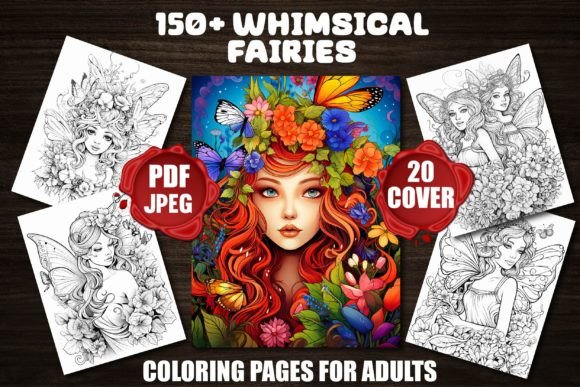
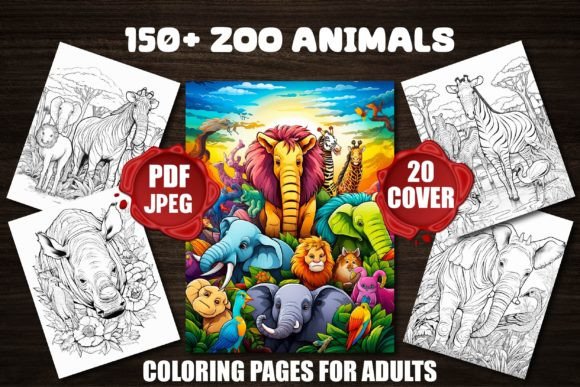
This isn’t a grab-bag of generic animal outlines. Every illustration is crafted at 300 DPI and sized to A4 (8.5×11″), ensuring crisp lines whether printed on home inkjet paper or premium cardstock. The interior files come as JPEGs—ready to open, select, and print without software hurdles—and are bundled into a clean, no-frills PDF for seamless access. There’s no watermarking, no forced subscriptions, and no upsells: just high-fidelity artwork, organized for clarity and ease.
The book cover assets—20 PNG files at 300 DPI—offer flexibility without compromise. Whether you’re designing a softcover for KDP, mocking up a social media ad, or preparing a classroom display, you can scale, crop, or layer them without pixelation. That attention to technical detail matters—not as a feature to list, but as reliability you feel the first time you hit “print” and see every whisker, scale, and feather hold true.
Why It Resonates Across Different Lifestyles
For busy professionals and caregivers, these pages offer more than distraction—they’re micro-resets. Ten minutes spent shading the layered fur of a snow leopard can lower heart rate and interrupt mental loops. Unlike scrolling or passive entertainment, coloring engages the hands and eyes in a low-stakes, rhythmic way that supports mindfulness without requiring meditation experience. You don’t need to “clear your mind”—you just follow the line.
Creatives and illustrators often use animal references to study form, proportion, and texture. These pages serve as accessible anatomy studies: notice how the elephant’s ear folds echo real vascular patterns, or how the parrot’s wing feathers overlap with natural layering logic. For someone sketching wildlife digitally, printing a few pages and tracing key structures can reinforce observational learning—no live model needed.
Educators and homeschoolers appreciate how easily these translate into cross-curricular tools. A page featuring a red panda beside bamboo isn’t just decorative—it opens doors to ecology (habitat loss), biology (adaptations like pseudothumbs), and even geography (Himalayan conservation efforts). Pair it with a short reading or discussion, and coloring becomes active engagement—not busywork.
KDP publishers and small business owners value the commercial-ready format. The JPEG interior files integrate smoothly into design workflows—whether you’re building a themed coloring series (“Zoo Life,” “Endangered Wonders,” “Nocturnal Keepers”) or bundling with guided journal prompts. Because all images are original and royalty-free for end-user printing, there’s no licensing guesswork. And since the covers are provided as transparent PNGs, branding stays consistent across multiple titles without redesign overhead.
Practical Priorities—And How This Collection Meets Them
- Ease of use: No installation, no logins. Open the PDF, pick a page, print. Ideal for beginners who’ve never used digital coloring resources before.
- Quality: 300 DPI ensures sharpness even when enlarged for framed art or classroom posters. Faint ghost lines or blurry edges—the kind that frustrate detailed work—are absent.
- Flexibility: JPEGs let you import individual pages into Procreate, Photoshop, or Canva. Want to add watercolor overlays? Adjust contrast for screen use? Change background color? The file format enables it.
- Long-term usefulness: Unlike trend-driven themes that fade, zoo animals carry timeless appeal—educational, nostalgic, emotionally resonant. You’ll return to these pages months later and still find new details to explore.
Who Might Look Elsewhere—and Why
If you’re seeking coloring pages with educational captions, step-by-step drawing guides, or interactive elements (like QR codes linking to animal facts), this collection doesn’t include those. It focuses on pure visual immersion—not instruction. Similarly, if you need editable vector files (SVG or AI) for large-format signage or laser-cut stencils, JPEGs won’t meet that need.
And while the animals represented span continents—from African lions to Australian kookaburras—the emphasis is on aesthetic richness, not exhaustive taxonomic coverage. You won’t find obscure subspecies or deep-dives into marine invertebrates here. That’s intentional: clarity and emotional resonance guide selection, not encyclopedic breadth.
A Thoughtful Fit for Real Needs
Whether you’re using Zoo Animals Coloring Pages to wind down after back-to-back Zoom calls, to spark conversation with a teen reluctant to talk about stress, to prototype a product line for an eco-conscious stationery brand, or simply to reclaim ten minutes where your only job is to choose which shade of ochre best captures a lion’s sun-warmed shoulder—this collection meets you where you are.
It doesn’t promise transformation. It offers consistency: reliable quality, respectful design, and space—quiet, ink-friendly space—to breathe, observe, and create. No pressure to share online. No expectation to finish. Just the steady, satisfying motion of color meeting contour, again and again.
That’s why people return—not for novelty, but for trust. Trust that the line will hold. That the detail will reward attention. That the act itself, repeated gently, builds something subtle but real: resilience, awareness, and a quieter kind of energy.